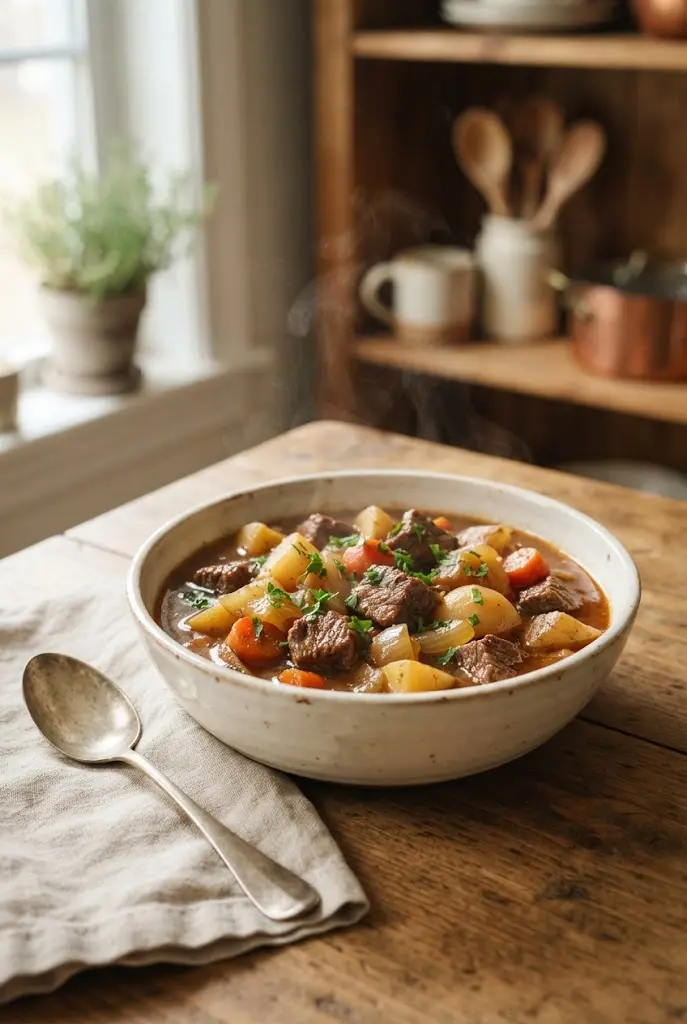
Cozy Stovetop Beef Stew Without Wine for Cold Nights and Family Dinners
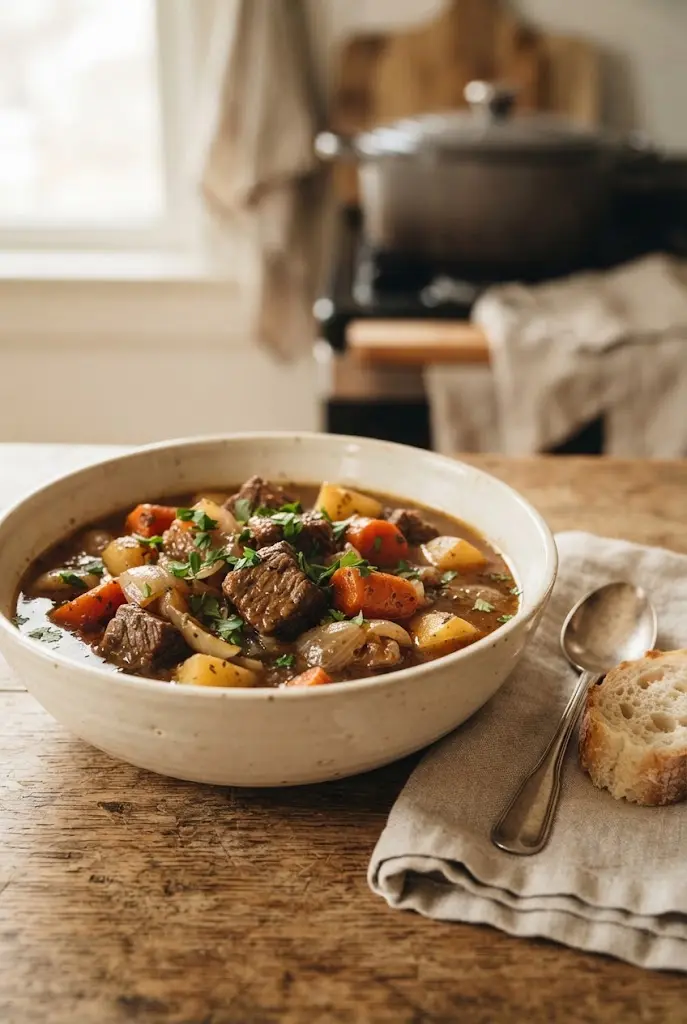
This cozy stovetop beef stew delivers tender chunks of beef, carrots, potatoes, and onions in a deeply savory broth—without using wine. A combination of beef broth, tomato paste, Worcestershire sauce, and a little balsamic vinegar provides the richness and acidity that wine would normally bring. Everything simmers in one heavy pot until the beef is fork-tender and the vegetables are soft but not mushy.
Why You’ll Love This Recipe
- No wine required: Beef broth, tomato paste, Worcestershire sauce, and balsamic vinegar create plenty of savory depth and balance.
- Made on the stovetop: No slow cooker or oven is necessary; a heavy Dutch oven or large pot does the work.
- Tender, flavorful beef: Browning the beef first builds a rich foundation before the long simmer.
- One-pot comfort food: The beef and vegetables cook together, keeping cleanup simple.
- Family-friendly: The seasoning is savory rather than spicy, with familiar potatoes and carrots.
- Excellent leftovers: The stew becomes even more flavorful after resting overnight in the refrigerator.
Ingredients
Serves 6 generously.
- 2 pounds boneless beef chuck roast, cut into 1½-inch cubes
- 1½ teaspoons kosher salt, divided
- 1 teaspoon freshly ground black pepper, divided
- 3 tablespoons all-purpose flour
- 2 tablespoons olive oil
- 1 large yellow onion, diced
- 3 medium carrots, peeled and cut into 1-inch pieces
- 3 cloves garlic, minced
- 2 tablespoons tomato paste
- 4 cups low-sodium beef broth
- 1 tablespoon Worcestershire sauce
- 1 tablespoon balsamic vinegar
- 1 teaspoon dried thyme
- 1 teaspoon dried rosemary
- 2 bay leaves
- 1½ pounds Yukon Gold potatoes, cut into 1½-inch chunks
- 1 tablespoon chopped fresh parsley, for serving
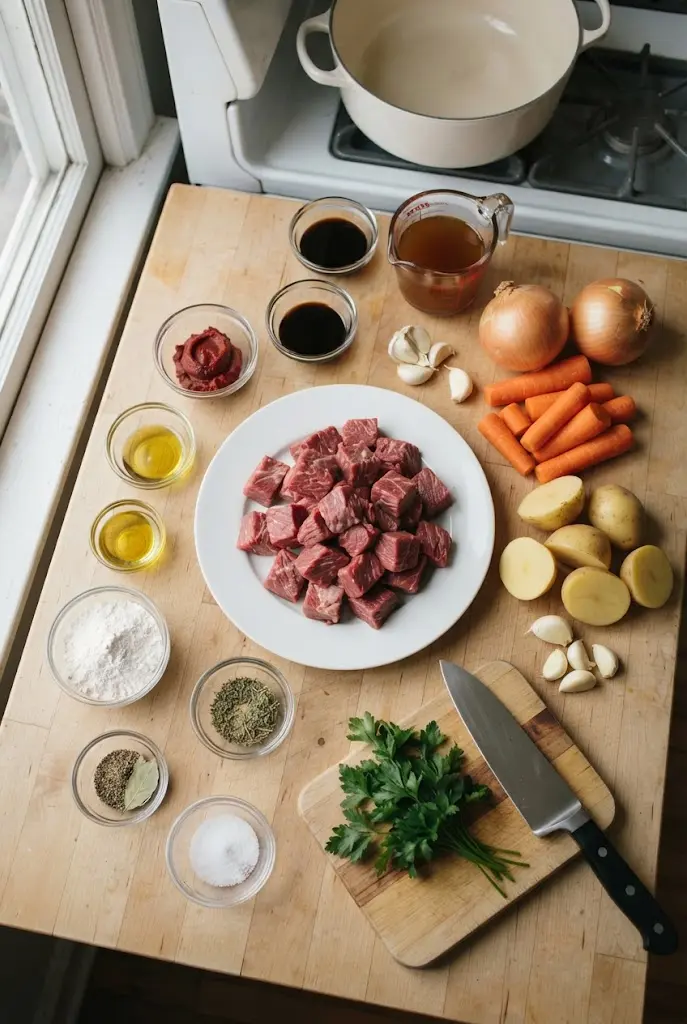
Ingredient Notes
Beef chuck: This is the best choice for a long stovetop simmer because its connective tissue gradually softens and helps give the stew body.
Yukon Gold potatoes: They hold their shape well while becoming creamy inside. Russet potatoes can work, but they tend to break down more quickly.
Low-sodium beef broth: Starting with low-sodium broth gives you more control over the final seasoning.
Tomato paste: A small amount adds concentrated savory flavor and helps deepen the color of the broth.
Worcestershire sauce: It contributes salty, savory, slightly tangy complexity without making the stew taste strongly of any one ingredient.
Balsamic vinegar: Just a tablespoon supplies the gentle acidity that helps replace some of the balance wine would normally provide.
All-purpose flour: Tossing the beef with flour helps it brown and gives the finished broth a little extra body.
How to Make Stovetop Beef Stew Without Wine
Season and Flour the Beef
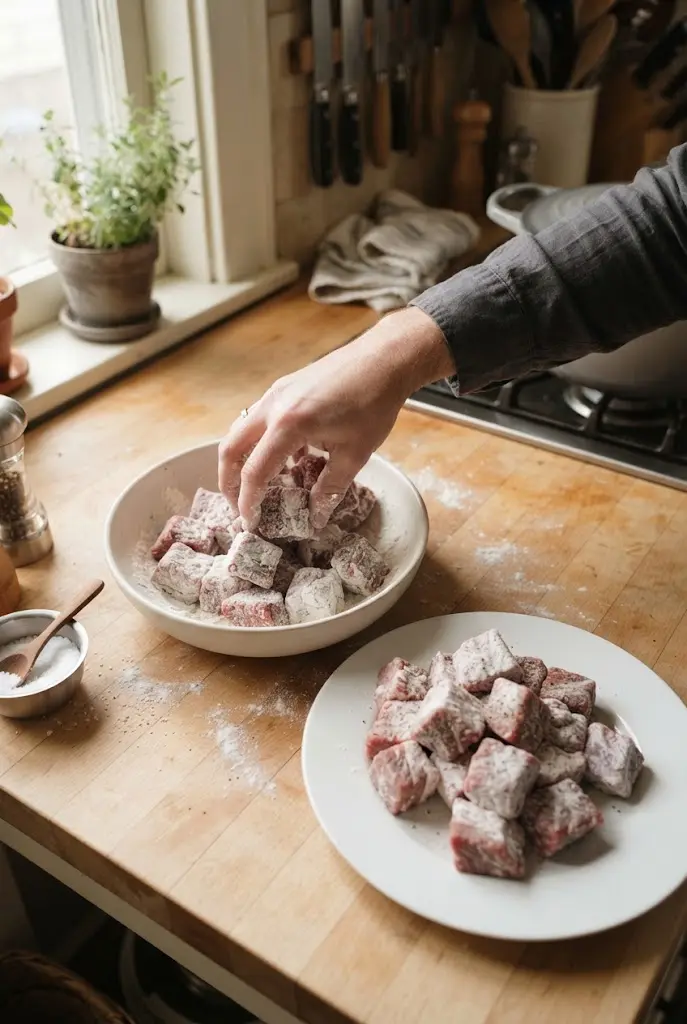
Pat the beef cubes dry with paper towels. Toss them with 1 teaspoon of the kosher salt, ½ teaspoon of the black pepper, and all of the flour until lightly coated.
Let the seasoned beef sit for a few minutes while you heat the pot. Drying the surface first is important because excess moisture can interfere with browning.
Brown the Beef
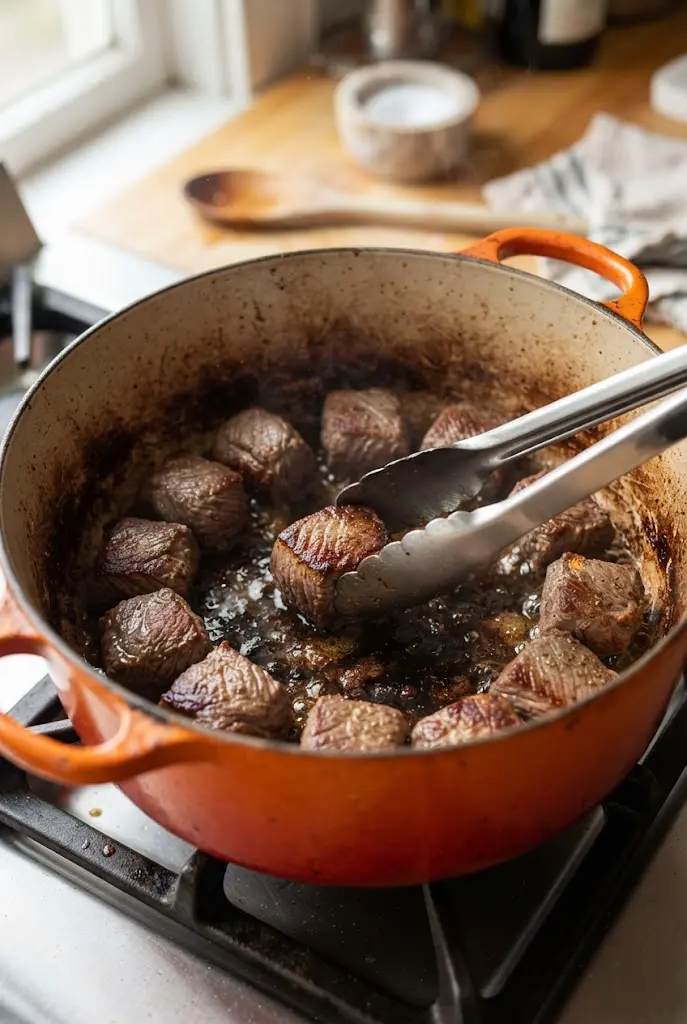
Heat a large Dutch oven or heavy-bottomed pot over medium-high heat. Add the olive oil. When the oil is shimmering, add the beef in a single layer, working in batches if necessary.
Brown the pieces for about 2–3 minutes per side, turning them until several sides have a deep golden-brown crust. Transfer the browned beef to a plate. It does not need to be cooked through yet.
Sauté the Aromatics and Tomato Paste
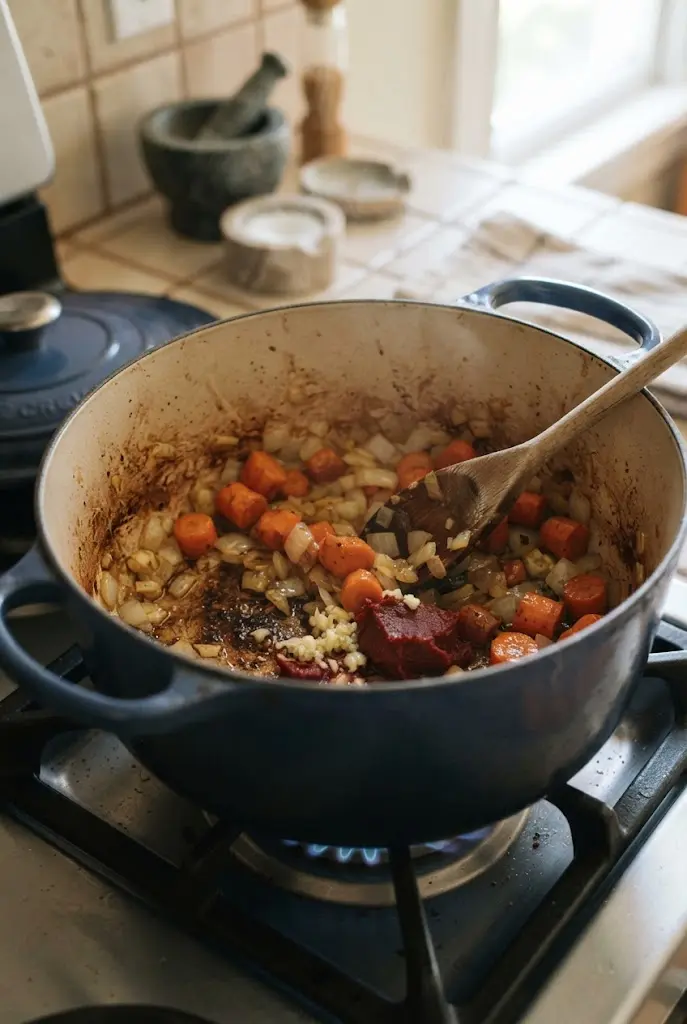
Reduce the heat to medium. Add the diced onion and carrots to the same pot and cook for 5–6 minutes, stirring occasionally, until the onion begins to soften and the vegetables pick up some of the browned bits from the bottom.
Add the garlic and tomato paste. Cook for about 1 minute, stirring constantly, until the garlic smells fragrant and the tomato paste darkens slightly.
Build the Wine-Free Broth
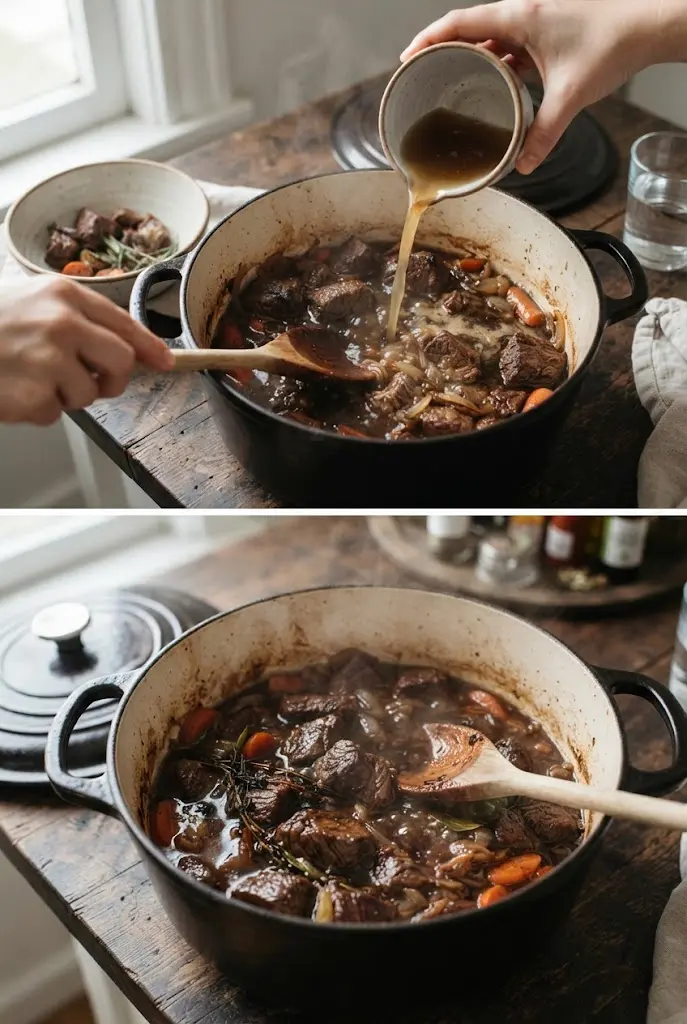
Pour in about 1 cup of the beef broth, scraping the bottom of the pot with a wooden spoon to loosen the browned bits. Add the remaining broth, Worcestershire sauce, balsamic vinegar, thyme, rosemary, bay leaves, and the remaining salt and pepper.
Return the browned beef and any juices on the plate to the pot. The liquid should come partway up the beef.
Simmer the Beef Until Tender
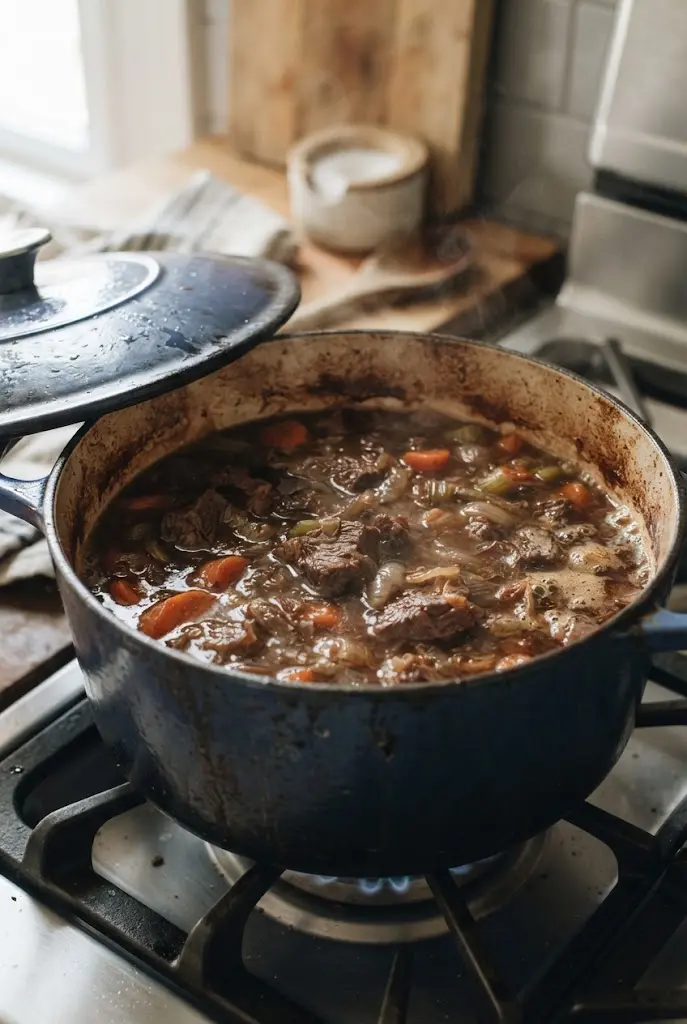
Bring the stew to a gentle simmer, then reduce the heat to low. Cover the pot partially and simmer for about 1 hour and 15 minutes, stirring every 20–25 minutes.
Keep the liquid at a gentle bubble rather than a hard boil. The beef should become noticeably more tender as the connective tissue breaks down.
Add the Potatoes
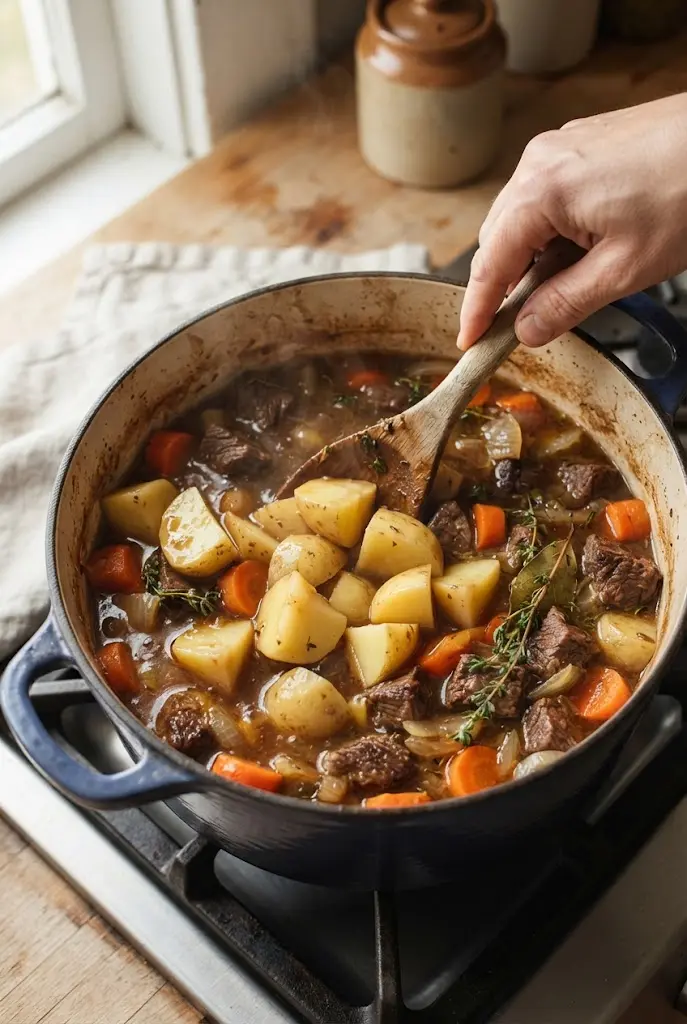
Stir in the Yukon Gold potatoes. If the liquid level has dropped significantly, add a small splash of beef broth or water so the potatoes are mostly surrounded by liquid.
Cover partially again and continue simmering for 25–30 minutes, or until the potatoes are fork-tender and the beef can be easily pierced with a fork.
Finish and Rest
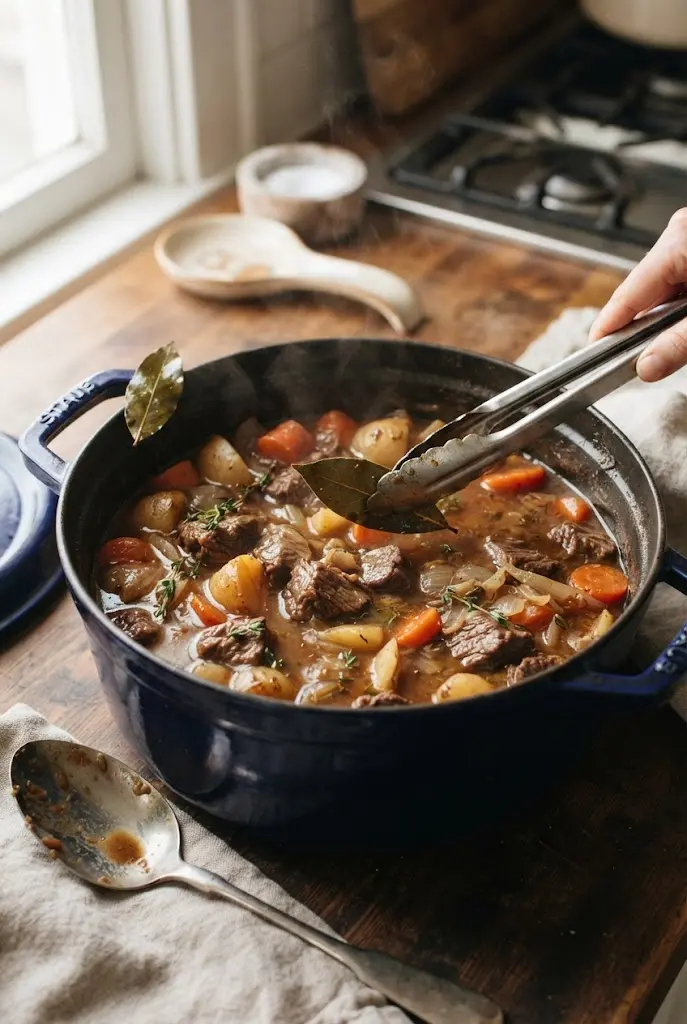
Remove the bay leaves. Taste the broth and adjust the salt and pepper if needed. If you prefer a slightly brighter finish, add another small splash of balsamic vinegar—about ½ teaspoon at a time.
Turn off the heat and let the stew rest uncovered for 5–10 minutes. The broth will settle and thicken slightly as it cools.
Recipe Tips
- Dry the beef before seasoning. Surface moisture makes it harder for the beef to develop a deeply browned crust.
- Brown in batches when needed. If the beef is crowded, it releases moisture and steams instead of browning.
- Don’t rush the simmer. A gentle, steady simmer gives the connective tissue in beef chuck time to soften.
- Keep the potato pieces fairly large. Small pieces can become soft and break apart before the beef is tender.
- Scrape the pot well. Those browned bits left behind after searing add substantial flavor to the broth.
- Add acidity gradually. The balsamic vinegar should balance the stew, not make it taste noticeably vinegary.
- Taste at the end. Broth, Worcestershire sauce, and beef can vary in saltiness, so the final seasoning is best adjusted after cooking.
The Best Beef Cut for Stovetop Stew
Beef chuck roast is the most dependable choice here. It has enough connective tissue and marbling to withstand a long simmer while becoming tender.
Cut the roast into pieces of roughly the same size so they cook at a similar rate. Avoid cutting the beef too small because it can become dry before the stew has finished developing its flavor.
How to Get Rich Flavor Without Wine
Wine commonly contributes both acidity and additional layers of flavor to beef stew. This version builds those qualities differently.
The browned beef and tomato paste provide deep savory notes, while Worcestershire sauce adds complexity. Balsamic vinegar supplies a small amount of acidity to keep the broth from tasting heavy.
The key is restraint. You want the finished stew to taste like a rich beef stew—not like a vinegar-based sauce.
Variations and Substitutions
- Beef broth: Regular beef broth can replace low-sodium broth. Reduce the added salt initially and adjust after simmering.
- Potatoes: Yukon Gold potatoes can be replaced with red potatoes. Cut them into similarly sized chunks.
- Fresh herbs: If you have fresh thyme or rosemary, use them instead of dried herbs, keeping in mind that fresh herbs are less concentrated.
- Gluten-free: Replace the all-purpose flour with a gluten-free all-purpose flour blend. Also check the labels of packaged broth and Worcestershire sauce if gluten avoidance is necessary.
- Mushrooms: Add 8 ounces of sliced mushrooms with the onions and carrots for an earthier stew.
- Extra vegetables: Celery is an easy addition; use 2–3 stalks cut into 1-inch pieces.
What to Serve With Stovetop Beef Stew
The stew is substantial enough to serve on its own, but a few simple sides work especially well:
- Crusty bread for soaking up the broth.
- Simple green salad for a fresh contrast.
- Roasted broccoli for another vegetable alongside the potatoes and carrots.
- Buttered dinner rolls when you’re serving a larger family meal.
- Steamed green beans if you want a lighter vegetable side.
Storage and Reheating
Refrigerator
Cool the stew promptly and transfer it to a covered, shallow airtight container. Refrigerate within 2 hours of cooking and use within 3–4 days.
The broth may thicken considerably when chilled, which is normal. The flavors also tend to meld as the stew rests.
Freezer
Beef stew freezes well, although potatoes can become somewhat softer after thawing. For best results, portion the cooled stew into airtight freezer-safe containers, leaving a little room for expansion.
Freeze for up to 3 months for best quality. Thaw overnight in the refrigerator before reheating.
Reheating
For the stovetop, place the stew in a saucepan or Dutch oven and warm over medium-low heat, stirring occasionally. Add a splash of beef broth or water if the stew has thickened too much.
Heat until the stew is steaming hot throughout. Avoid a vigorous boil, which can make the vegetables break apart.
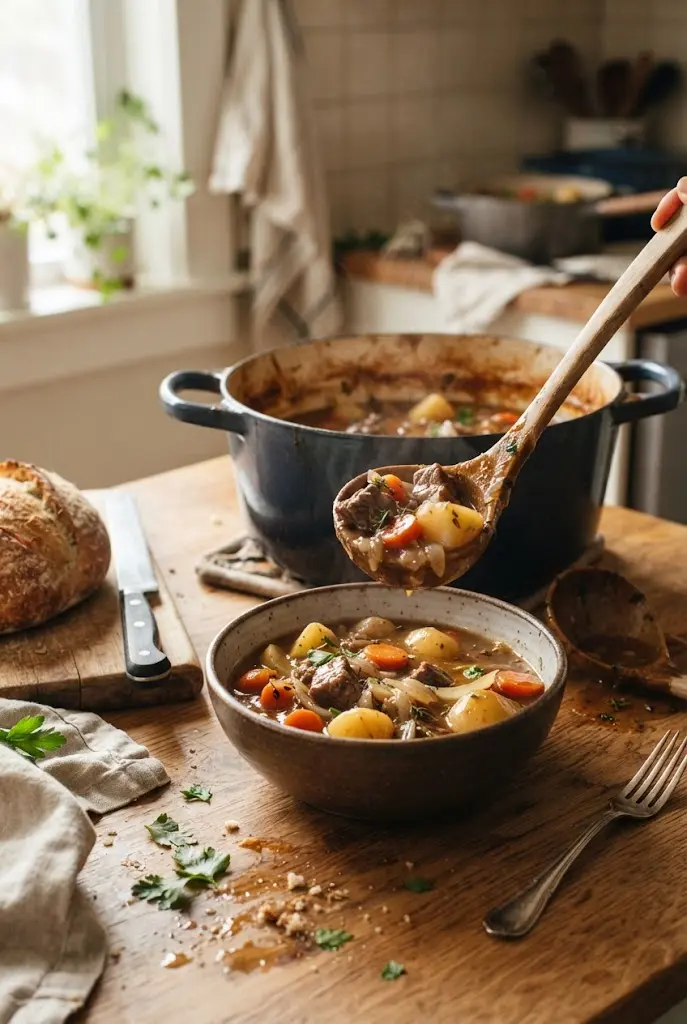
Cozy Stovetop Beef Stew Without Wine
Tender chunks of beef, carrots, potatoes, and onions simmer in a deeply savory broth made without wine. Beef broth, tomato paste, Worcestershire sauce, and balsamic vinegar create rich flavor and balance in every spoonful.
Why You’ll Love It
Beef broth, tomato paste, Worcestershire sauce, and balsamic vinegar provide savory depth and balance.
No slow cooker or oven is needed. A heavy Dutch oven or large pot does the work.
Browning the beef first creates a rich foundation before the gentle simmer.
The flavors meld beautifully after resting overnight in the refrigerator.
Ingredients
- 2 pounds boneless beef chuck roast, cut into 1½-inch cubes
- 1½ teaspoons kosher salt, divided
- 1 teaspoon freshly ground black pepper, divided
- 3 tablespoons all-purpose flour
- 2 tablespoons olive oil
- 1 large yellow onion, diced
- 3 medium carrots, peeled and cut into 1-inch pieces
- 3 cloves garlic, minced
- 2 tablespoons tomato paste
- 4 cups low-sodium beef broth
- 1 tablespoon Worcestershire sauce
- 1 tablespoon balsamic vinegar
- 1 teaspoon dried thyme
- 1 teaspoon dried rosemary
- 2 bay leaves
- 1½ pounds Yukon Gold potatoes, cut into 1½-inch chunks
- 1 tablespoon chopped fresh parsley, for serving
Quick Instructions
-
1
Season & Flour
Pat the beef dry, then toss with 1 teaspoon salt, ½ teaspoon pepper, and the flour.
-
2
Brown the Beef
Heat olive oil in a heavy pot and brown the beef in batches for about 2–3 minutes per side. Transfer to a plate.
-
3
Sauté Aromatics
Cook the onion and carrots for 5–6 minutes. Add garlic and tomato paste and cook for about 1 minute.
-
4
Build the Broth
Add 1 cup broth and scrape up the browned bits. Add remaining broth, Worcestershire sauce, balsamic vinegar, herbs, bay leaves, and remaining seasoning.
-
5
Simmer the Beef
Return beef and juices to the pot. Bring to a gentle simmer, reduce heat, partially cover, and cook for about 1 hour 15 minutes.
-
6
Add Potatoes
Stir in the potatoes and continue simmering for 25–30 minutes, until the potatoes are fork-tender and the beef is easily pierced.
-
7
Finish & Rest
Remove the bay leaves, adjust seasoning, and rest the stew uncovered for 5–10 minutes before serving.
Dry the beef thoroughly before seasoning and brown it in batches. Keeping the pot uncrowded helps the beef develop a deep golden-brown crust instead of steaming, creating a richer foundation for the stew.
Variations
- Use regular beef broth and reduce the added salt initially.
- Swap Yukon Gold potatoes for red potatoes.
- Use fresh thyme or rosemary in place of dried herbs.
- For gluten-free preparation, use a gluten-free flour blend and check broth and Worcestershire labels.
- Add 8 ounces sliced mushrooms for an earthier flavor.
- Add 2–3 celery stalks cut into 1-inch pieces.
Serving Ideas
- Crusty bread for soaking up the broth.
- A simple green salad for fresh contrast.
- Roasted broccoli alongside the stew.
- Buttered dinner rolls for a larger family meal.
- Steamed green beans for a lighter vegetable side.
Storage & Reheating
Refrigerator: Refrigerate within 2 hours in a covered, shallow airtight container and use within 3–4 days.
Freezer: Freeze cooled stew in airtight freezer-safe containers for up to 3 months for best quality. Thaw overnight in the refrigerator.
Reheat: Warm over medium-low heat, adding a splash of broth or water if needed. Heat until steaming hot throughout without bringing to a vigorous boil.